
There was a lot of anticipation before our first family holiday together. I hadn’t been away from home in twenty years. It was the children’s first holiday, and I had no idea how I was going to cope away from home.
Anticipation always seems to focus on negative “what ifs”. Something my mind would never have anticipated was how this holiday would positively impact my seventeen-year-old autistic son.
My son can talk, but more often than not, selective mutism steals his voice. Conversations at home are usually one-sided, with him offering short answers. He rarely initiates a conversation.
As with many autistic teenagers, he hides away in the comfort of his hoodie and keeps himself to himself.
When we arrived at our holiday destination, I saw the first signs of a change. It came slowly. As we explored the caravan site, he asked questions, pointed things out to me, and ran ahead to do his own exploring.
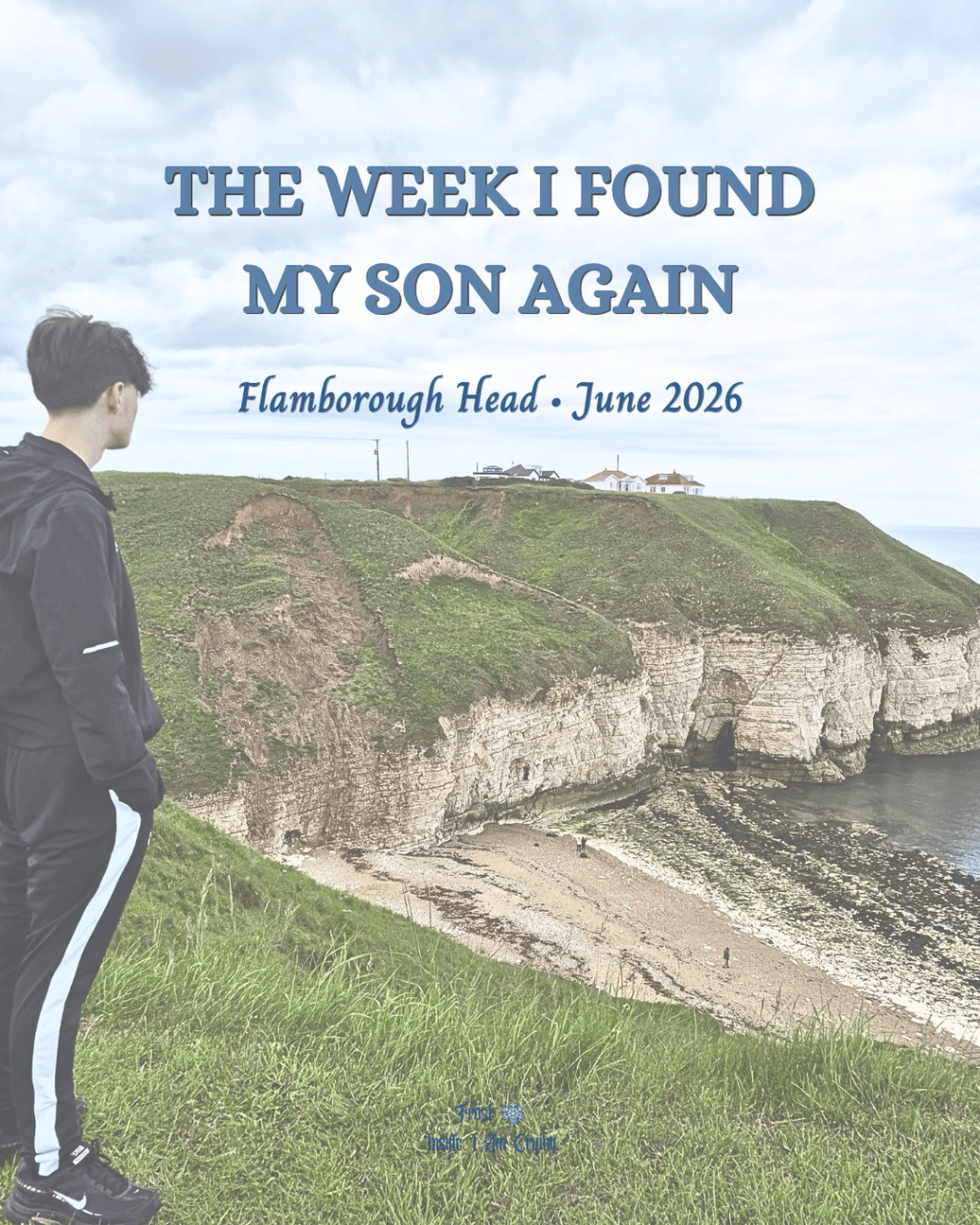
On the second day, we planned to visit Bempton Cliffs and see the seabirds. The rain held off until we arrived. Then the clouds burst open as we stood admiring guillemots and gannets.
Unfortunately, I hadn’t packed a coat. All I had was a thin rain poncho. The rain was beating down on me, and I still hadn’t seen a single puffin. The wetter I got as we walked along the windy cliff edge, the more I wanted to leave.
But my son said to me,
“We came here to watch the birds, and if we don’t walk the other way, you might miss a puffin. We can’t go when there’s still a chance.”
Suddenly, it stopped being about puffins for me and became about seeing the man my son has become.
Not only was he right, but he showed me that he understood the importance of this trip. He demonstrated that he listens to conversations even when he can’t always join them.
We never did see a puffin that day. They had more sense than to be out of their burrows in torrential rain and high winds. But seeing my son smile, a genuine smile, and engage in the day meant more to me than seeing a puffin ever could.
Later that week, we visited the on-site arcade. My son stood watching me try to win a fluffy duck plushie from one of the machines. I must have fed that machine three pounds before finally giving up.
The plan that evening was to attend a quiz night in the entertainment venue. However, my youngest daughter isn’t great with noise and crowds. She is thirteen and also autistic, so my son stayed in the arcade with her while my husband, my eldest daughter and I went to the quiz.
When we came out, we found the other two children waiting for us.
My son, all six feet of him, walked over with the biggest grin on his face and said,
“I won you this.”
He handed me a bright pink fluffy duck with silver streaks running through it.
I don’t think I have ever been so emotional over a stuffed toy before. It wasn’t because I got the duck I wanted. It was because, once again, my son had thought of me and done something loving.
He laughed, and we walked back to our caravan together.
Every morning he was the first one awake and sitting in the living room. He would open the curtains and be dressed, ready for the day. Nothing like that happens at home.
He tried new foods and liked most of them.
At no point did he disappear into a bedroom or spend hours hidden away on a console.
For me, I found my little boy again.
He was still there inside the man-sized body he has now. His humour, his kindness, his love of nature and his wonderful personality all surfaced during this holiday.
This holiday didn’t just mean something to me. It meant something to him too.
He was relaxed. He felt secure. He found his voice and wasn’t afraid to use it.
I learned that I need to get my ears tested because he has a fast, quiet voice that is worth hearing.
Most importantly, I realised that my son is a lot like me.
He comes alive in nature and will only start a conversation when there is something worth talking about.
One thing I will say to end this piece is this:
Those who use fewer words notice everything.
— Frost ❄️


Leave a Reply